
Key Takeaways
Modern SEO is built around user intent and topical authority, not keyword density. Search engines today read context, trust signals, and content quality the same way a knowledgeable editor would. Technical SEO, on-page strategy, and content depth all work together. Backlinks still carry weight, but quality beats volume every time. Local businesses have more leverage than they realize. And real SEO performance is measured in traffic, engagement, and conversions, not just rankings. One last thing worth saying upfront: this takes time. Every shortcut eventually costs more than it saves.
What Is Modern SEO and How Is It Different from Traditional SEO?
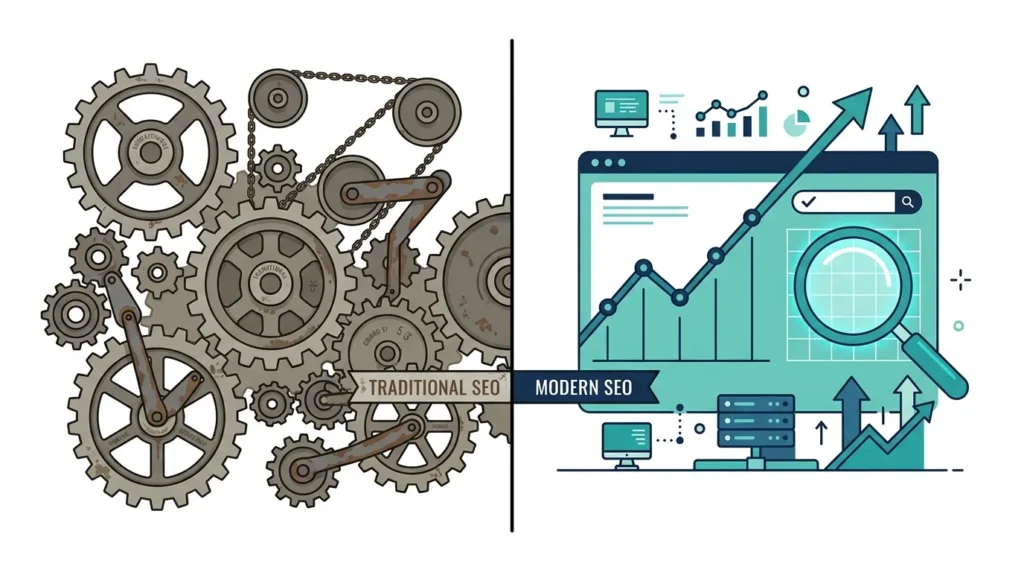
Old SEO was largely a numbers game. More keywords, more backlinks, higher rankings. Simple enough, until it stopped working.
What replaced it is less mechanical and more strategic. Today, search engines try to understand what a person actually wants when they type a query, not just which words appear on your page. Google’s evolution through Hummingbird, RankBrain, and BERT pushed the technology from pattern-matching to something much closer to intent-reading.
The practical difference is significant. An old approach would stuff the phrase “best running shoes” across a page and call it optimized. A modern approach asks: what does someone searching that phrase genuinely need? Are they comparing models? Looking for budget picks? Trying to understand sizing? The page that answers the full question is the one that wins.
Tip: Search your target keyword and study what is already ranking. The format of those top results tells you exactly what Google has decided satisfies that query.
How Do Search Engines and AI Systems Actually Work Today?
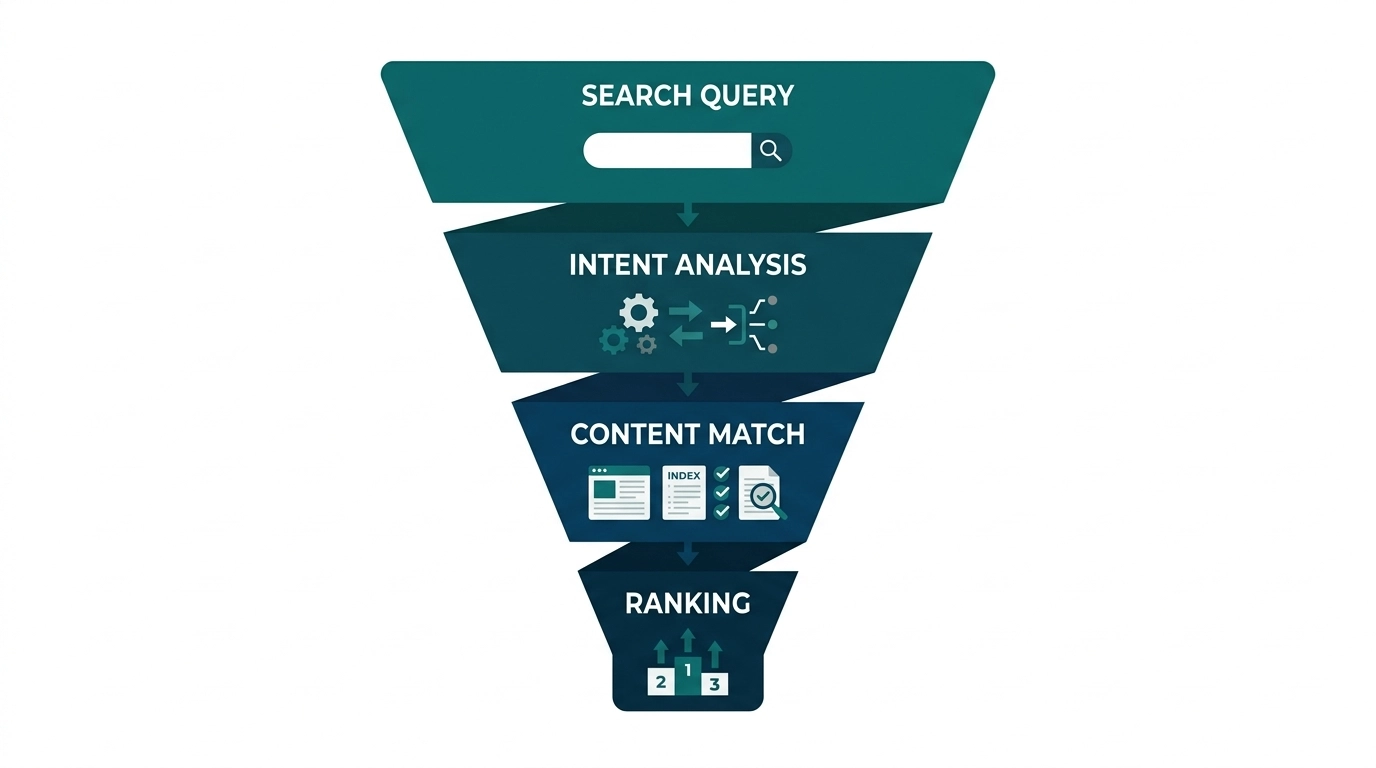
When someone searches, Google does not scan the live web. It pulls from its index, a continuously updated map built through automated crawling. What happens after that query is entered is where modern search diverges sharply from anything that existed a decade ago.
AI-powered systems like Google’s MUM and its Gemini-based models interpret meaning, not just syntax. They assess content quality, topical relevance, and how completely a page addresses a user’s needs before assigning any ranking.
Structured data plays a quiet but important role here. Schema markup signals to Google whether your page is a product listing, a FAQ, a local business, or a how-to guide. Getting that right makes your content eligible for rich results in search, which improve visibility without necessarily requiring a higher ranking position.
Tip: Use Google’s URL Inspection Tool inside Search Console to see exactly how Googlebot renders and reads your pages. Most site owners never check this and miss obvious issues.
Why Must SEO Strategies Adapt to the Modern Search Landscape?
The businesses losing organic traffic right now are not always doing SEO badly. Many are doing old SEO well, and that is precisely the problem.
User behavior has shifted in ways that matter. Voice searches are longer and more conversational. AI-powered features on the results page answer questions directly, reducing clicks to websites. Users expect fast load times, clean mobile experiences, and immediate answers, all without friction.
Old tactics do not just fail in this environment. They actively backfire. Keyword stuffing, thin content, and mass link schemes now trigger penalties. Google’s core updates are built specifically to identify and demote content that prioritizes ranking over usefulness.
Tip: Pull up Google Search Console and look at pages that lost clicks over the past 12 months. Any content older than 18 months that has not been updated is the first place to start refreshing.
What Are the Most Effective Modern SEO Strategies Today?
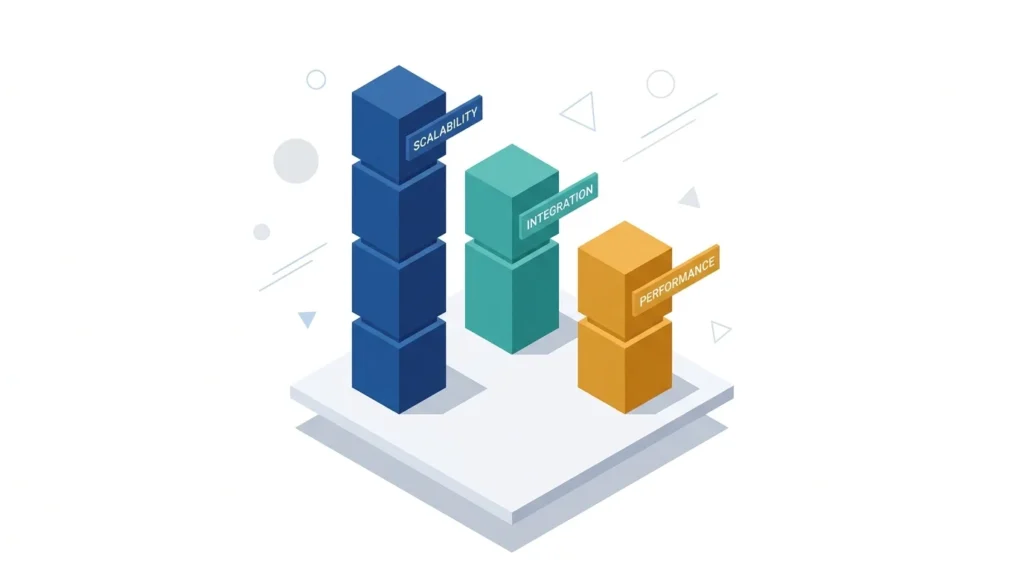
There is no single tactic that defines modern SEO. What works is a system where three elements reinforce each other.
Topical authority is the idea that Google rewards depth, not breadth. One strong service page supported by related articles, FAQs, and guides signals real expertise across a subject area far more convincingly than ten isolated pages each targeting a different keyword.
Semantic keyword strategy means thinking about the full conversation around a topic, including questions, comparisons, common objections, and adjacent concepts. Tools like Ahrefs, Semrush, and Google’s “People Also Ask” section reveal the clusters of queries real users explore around any subject.
Search intent alignment is where many otherwise well-optimized pages quietly fail. A page written like a blog post will not rank for a commercial query, regardless of how technically clean it is. Every piece of content should map to a specific intent: informational, commercial, transactional, or navigational.
Tip: Go through your site and assign each page one clear intent type. Any page that does not match the intent of its target queries needs a rewrite before anything else.
How Does On-Page SEO Work in Modern Optimization?
This is where strategy becomes execution, and where small mistakes can silently suppress rankings for months.
Your title tag is a direct ranking signal. Keep it between 50 and 60 characters, include your primary keyword naturally, and write it to earn the click, not just describe the page. Meta descriptions do not directly affect rankings, but they influence whether someone chooses your result over the ones beside it.
Content structure matters more than most people realize. Descriptive H2 and H3 headings, short paragraphs, and scannable formatting all improve both user experience and how clearly search engines read your content hierarchy.
What to avoid: keyword stuffing in headings, duplicate title tags across pages, and dense walls of unbroken text. Over-optimization, forcing keywords into places they do not belong, is penalized by modern algorithms just as much as ignoring keywords entirely.
Tip: Yoast SEO and Rank Math (both free on WordPress) flag on-page issues before you publish, including missing tags, readability problems, and keyword placement gaps.
What Role Does Technical SEO Play in Modern SEO Performance?
Strong content will not rank if search engines cannot properly access, crawl, and index it. Technical SEO is the foundation everything else sits on, and it is often the last thing businesses pay attention to.
Google’s Core Web Vitals, specifically LCP (load speed), INP (interactivity), and CLS (layout stability), directly affect ranking. A page that loads slowly or shifts around while loading signals poor user experience, regardless of how good the content is. Google’s PageSpeed Insights shows you exactly where to improve.
Site architecture matters too. Clean, logical structure helps crawlers move efficiently through your site and distributes authority to the pages that need it. Important pages buried five clicks deep, or orphan pages with no internal links pointing to them, are essentially invisible to both search engines and users.
Structured data, as mentioned earlier, is also worth investing in here. Schema markup opens the door to FAQ dropdowns, star ratings, event listings, and other rich results that boost click-through rates without requiring you to climb higher in the rankings.
Tip: Screaming Frog SEO Spider (free up to 500 URLs) gives you a full technical snapshot of your site, including broken links, duplicate tags, redirect chains, and missing metadata, all in one pass.
How Is AI Changing Modern SEO Strategies?
AI has changed what “ranking” even means for a growing share of queries. Google’s AI Overviews now answer informational questions directly at the top of the results page, before a single organic result appears. Studies from early 2025 showed these features reducing click-through rates by 20 to 40 percent for affected queries. That is not a minor shift.
The strategic response is to optimize for being selected, not just for being ranked. AI systems pull content from pages that are authoritative, clearly structured, and factually direct. Content that answers questions concisely near the top of each section is far more likely to be cited in these features.
Beyond Google, platforms like ChatGPT and Perplexity are now functioning as search tools for a significant audience. These systems draw from high-authority sources, Reddit, YouTube, and established publications. Multi-platform visibility is no longer optional for businesses that want full coverage in AI-assisted search.
Tip: Structure your content so each section opens with a direct, specific answer. That is the format AI Overviews consistently pull from, and it also improves readability for human visitors.
Do Backlinks Still Matter in Modern SEO?
Yes, consistently. Research from Ahrefs and Backlinko across millions of search results confirms that pages ranking in the top three positions have significantly stronger backlink profiles than those below them. That correlation has not weakened.
What has changed is the quality threshold. A hundred low-quality links from irrelevant sites can actually hurt your rankings today. Google’s SpamBrain system identifies unnatural link patterns and penalizes them.
Modern link building is earned, not manufactured. Original research, comprehensive guides, and genuinely useful tools attract natural citations. Expert commentary placed in industry publications builds authority the right way. Guest posting still works, but only on relevant, authoritative sites, not link farms.
Tip: Use the Links report in Google Search Console to identify your most-linked pages. Study what made them linkable, then replicate that content model across other topics on your site.
How Can Small Businesses Improve Search Visibility Today?
Small businesses do not need enterprise budgets to compete. What they need is relevance and trust within a specific, defined market.
Your Google Business Profile is the highest-ROI SEO activity available to most local businesses. Complete every field, add real photos regularly, respond to every review, and keep your information consistent across all directories. The Local Pack, those map results at the top of local searches, often drives more traffic than the organic results below it.
Go narrow and deep rather than broad. A local physiotherapy clinic does not need to rank nationally for “physiotherapy.” It needs to own results for its specific locations, treated conditions, and the questions patients ask before booking. Hyperlocal content with genuine depth beats broad generic pages every time.
A consistent stream of genuine Google reviews is one of the strongest local ranking signals available. Ask satisfied customers immediately after a positive experience. Timing matters more than most businesses realize.
How Do You Measure Modern SEO Performance?
Rankings alone do not tell you whether SEO is generating real business value. A useful measurement framework tracks three things.
Visibility covers impressions, ranking positions, and search feature appearances, all tracked in Google Search Console.
Traffic covers organic sessions, click-through rate, and new users from organic search, tracked in Google Analytics 4.
Business outcomes cover organic conversions, leads, and revenue attributed to organic traffic. This is where SEO connects to actual results.
The combination of Search Console and GA4 shows the full picture, from the query that brought someone in to what they did on your site afterward.
Tip: Build a monthly SEO dashboard in Google Looker Studio (free) pulling from both tools. Month-over-month trend data reveals patterns that single snapshots consistently miss.

What Are the Most Common Modern SEO Mistakes to Avoid?
Ignoring search intent is the most widespread mistake. Publishing content that does not match why someone is searching means that content will not rank, regardless of how well it is written technically. Always analyze what is already ranking before you create anything.
Keyword stuffing still happens more than it should. Forcing keywords unnaturally into headings, alt text, and body copy triggers over-optimization issues. Write naturally. If the keyword fits the sentence, use it. If the sentence sounds strained, remove it.
Treating SEO as a one-time task is how businesses slowly lose ground. Content needs refreshing, technical issues need monitoring, and new link opportunities need pursuing. Initial optimization is a starting point, not a finish line.
Neglecting internal links is one of the most overlooked quick wins available. Connecting related pages distributes authority, improves crawlability, and helps users discover more of your content, with no new content required.
What Does a Sustainable SEO Strategy Look Like?
Sustainable SEO is built on content that earns its rankings rather than manipulates for them. Google’s quality systems are increasingly good at distinguishing content built to help from content built purely to rank. The former compounds in value over time. The latter faces ongoing risk with every algorithm update.
Technical stability matters just as much. Sites that maintain fast load times, clean architecture, and regular health audits do not experience the sudden ranking drops that come from years of neglect.
Realistic expectations are part of sustainability too. Most strategies show meaningful movement within three to six months. Significant compounding return becomes visible around 12 to 18 months. Businesses that abandon their strategy at month three consistently leave the most valuable phase of return unrealized.
Tip: Balance new content creation with monthly refreshes of existing pages. Updated, accurate content consistently outperforms stale pages, especially after algorithm updates.
When Does Modern SEO Not Work as Expected?
SEO has real limitations, and it is worth being honest about them.
In highly competitive markets, ranking for high-volume terms without established authority takes significant time, regardless of execution quality. The answer is specificity: niche topics, long-tail queries, and angles competitors have not covered.
SEO generates traffic. If that traffic does not convert, the problem is usually the offer, the user experience, or the audience fit, not the SEO itself.
For purely informational queries, AI Overviews are capturing clicks that previously went to organic results. Businesses that rely heavily on informational content with no conversion pathway face a structural risk. Content strategy diversification, commercial pages, comparison content, video, helps address that directly.
FAQs About Modern SEO
What is modern SEO?
Modern SEO is the practice of aligning your website with how search engines and AI systems evaluate content, intent, and authority. It goes beyond keywords to include technical performance, content depth, and user experience across platforms.
How is modern SEO different from traditional SEO?
Traditional SEO focused on keyword volume and backlink quantity. Modern SEO prioritizes user intent, topical authority, semantic search, and Core Web Vitals. The shift is from satisfying an algorithm mechanically to genuinely serving the person searching.
Does SEO still work in AI search?
Yes. Strong SEO foundations, authority, technical health, and quality content, determine both organic rankings and whether your content gets cited in AI-generated answers. The two are more connected than most people assume.
How long does SEO take?
Most strategies show measurable movement within three to six months. Significant ROI becomes visible around 12 months. Competitive markets take longer. Quality strategies compound in value; shortcuts rarely do.
What is the role of AI in modern SEO?
AI influences SEO in two distinct ways. Search engines use it to evaluate content quality and rank pages. AI-powered features like Google’s AI Overviews change how and where results are displayed. Optimizing for both traditional rankings and AI citation is now part of any complete strategy.