

You’ve probably Googled your own business at some point and watched a competitor, one you know offers worse service, sitting comfortably on page one while you’re buried somewhere on page four. You know SEO is the answer. But every agency quote you’ve received sounds like it was written for a company ten times your size.
Here’s the thing: affordable SEO packages for small businesses do exist. The problem is that genuinely good ones and completely useless ones are often priced the same. Knowing the difference is what this article is actually about.
In 2026, most small businesses spend somewhere between $500 and $1,500 per month on SEO services. Basic packages start around $300. Full-service campaigns with content, backlinks, and technical work can push past $3,000 monthly. But price alone tells you almost nothing about whether a package will work for your business.
Take a local plumbing company trying to rank for “plumber near me.” A package that only includes keyword tracking and a monthly PDF report won’t generate a single phone call. A package that combines keyword research, Google Business Profile optimization, on-page SEO, and backlink building? That one can gradually move them into the local results where customers are actively searching.
The packages that consistently work for small businesses tend to focus on three things: search visibility through keyword research and on-page work, authority building through content and backlinks, and technical health through regular audits. These aren’t buzzwords. They’re the actual levers that move rankings.
Before you commit to anything, ask the agency for a clear list of monthly deliverables. How many content pieces? How many backlinks? Which keywords are being targeted? What technical fixes are included? If they can’t answer that clearly, keep looking. Also make sure reporting goes through Google Analytics or Search Console so you can see real numbers, not just a ranking screenshot.
Why Small Businesses Need a Different Kind of SEO Strategy
The most common mistake small business owners make with SEO is trying to do what big brands do. It makes sense on the surface: big brands rank well, so copy their approach. In practice, it almost never works.
Stop Competing on the Wrong Battlefield
Large companies target thousands of keywords. They publish hundreds of articles a month. They have full teams running technical audits, writing content, and building links simultaneously. You don’t have that, and you shouldn’t try to replicate it.
A national home improvement brand might go after “home renovation services.” A local contractor targeting “kitchen renovation contractor in Dallas” is playing a completely different, and far more winnable, game. Long-tail keywords with local intent generate faster leads and far less wasted effort. That’s not settling for less; that’s being strategic.
Local Search is Where Small Businesses Actually Win
When someone types “plumber near me” or “best dentist in Chicago,” Google doesn’t just pull up websites. It looks at proximity, Google Business Profile signals, local citations, and review activity. Most affordable SEO packages for small businesses should be built around exactly these factors, not broad national keyword strategies.
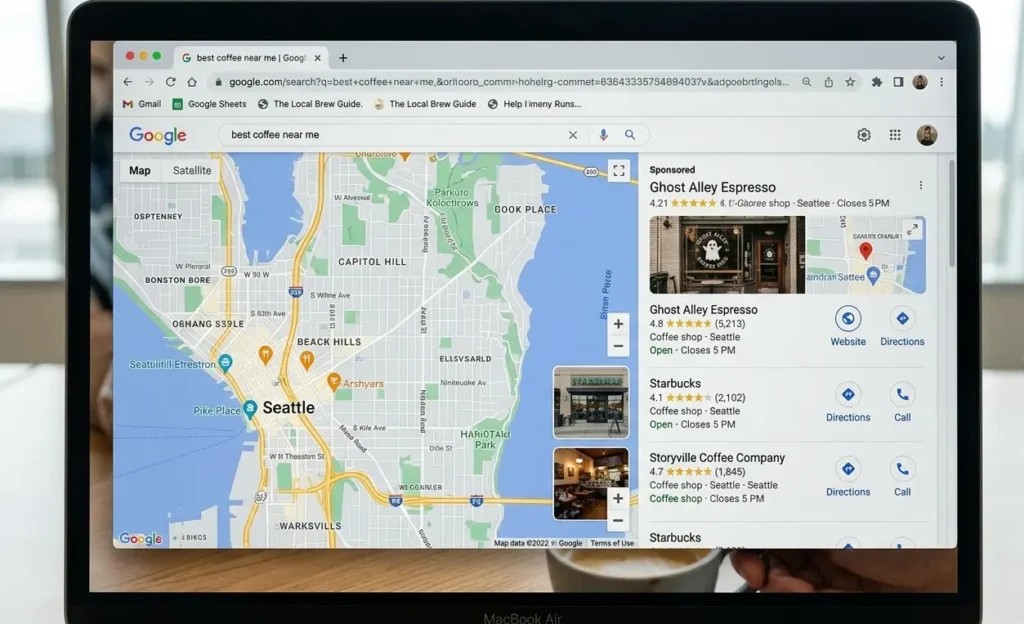
The businesses that show up in that three-pack map result at the top of the page aren’t there by accident. They’ve invested in local SEO work, and for most small businesses, that’s the highest-return investment available.
Tight Budgets Force Better Focus
There’s an underrated advantage to working with a limited SEO budget: it forces prioritization. Instead of spreading effort across 200 keywords and hoping something sticks, a focused small business SEO strategy picks the 10 to 15 keywords that actually drive customers, builds authority around those, and measures real outcomes. Less noise, more signal.
What Should an Affordable Small Business SEO Package Actually Include?
This is where a lot of small business owners get burned. The agency sounds professional on the call, the proposal looks polished, but when results don’t come after six months, there’s nothing in writing explaining what was actually supposed to happen each month.
A solid SEO package should have clear, tangible deliverables across these core areas.
Keyword research and competitive analysis. Not a one-time exercise done at signup, but an ongoing process. Tools like Semrush or Google Keyword Planner should be used to find gaps where you can realistically compete.
On-page optimization. Meta titles, meta descriptions, header structure, internal linking, image alt text. These are table stakes. If a package doesn’t include this, it’s not a real SEO package.
Technical SEO. Site speed, mobile indexing, crawlability, Core Web Vitals, structured data. Google can’t rank a page it can’t properly read. Technical issues quietly kill rankings and most business owners never know they exist until an audit surfaces them.
Local SEO and Google Business Profile management. For any business serving a specific area, this is non-negotiable. GBP optimization, citation consistency, and review strategy belong in every local SEO package.
Content creation. Service pages, blog posts, location pages. Content is how you tell search engines what you do and for whom. Without it, even good technical work has limited ceiling.
Link building. Backlinks from credible, relevant sites still carry significant ranking weight. The approach matters though; white-hat outreach and genuine placements are worth far more than bulk directory submissions.
Monthly reporting. Not a screenshot of rankings. Actual traffic data, lead tracking, and keyword movement through Google Analytics 4 and Search Console.
When all of these work together consistently, the results compound. When one or two are missing, the whole strategy tends to plateau.
How Much Do Small Business SEO Packages Cost? An Honest Breakdown
SEO pricing is genuinely confusing, partly because agencies structure it so differently and partly because results are harder to see than, say, a paid ad campaign.
Here’s a realistic picture of what different price points actually get you.
| Package Tier | Monthly Price Range | Best For |
| Starter | $300 to $600 | New sites, low-competition local markets |
| Growth | $600 to $1,200 | Established local businesses chasing city-level rankings |
| Authority | $1,200 to $2,500 | Competitive industries, multi-location businesses |
| Enterprise | $2,500 and above | National campaigns, large e-commerce operations |
The Under $200 Warning
If you see an SEO package priced at $99 or $149 per month, the math simply doesn’t work. Real SEO takes skilled human time. At that price, you’re almost certainly getting automated backlinks, recycled content, or keyword stuffing tactics that can actually trigger Google penalties. A penalty can take months to recover from, and the recovery process costs more than the package ever did.
Why $500 to $1,500 is the Real Sweet Spot
This range allows an agency to do genuinely useful work each month: fresh content, real link outreach, ongoing technical improvements, and local SEO maintenance. It’s not extravagant. It’s the minimum for a proper effort.
One-time SEO projects almost never sustain results either. Search engine optimization is a continuous process. Google’s algorithm updates frequently, competitors keep publishing, and your site needs regular attention to maintain and grow its position.
A Simple Way to Think About ROI
Say your average customer is worth $1,500. SEO starts generating five new leads a month. Even if only one of those converts, that’s $1,500 in revenue from an $800 monthly investment. The math tends to improve significantly as rankings stabilize and traffic compounds over time.
Local SEO or National SEO: Which One Actually Fits Your Business?
This decision matters more than most people realize, and getting it wrong wastes months of budget.
You Probably Need Local SEO If…
Your customers come from a specific city, neighborhood, or service area. Restaurants, contractors, dentists, law firms, and service businesses all fall here. A local SEO package optimizes for map pack visibility, “near me” searches, and GBP rankings. A neighborhood cafe will get far more value from appearing in local map results than from ranking for national terms no nearby customer is searching.
You Need National or E-commerce SEO If…
Your customers can be anywhere. SaaS companies, online retailers, and digital service providers need broader keyword strategies, stronger content programs, and link-building campaigns that build authority across competitive national search results.
Growing Businesses Often Need Both, Just Not at the Same Time
Start local. Dominate your immediate market first. Build the foundation. Once local rankings are generating consistent leads, you can gradually layer in broader keyword targets and content strategies. Trying to do both from day one with a limited budget usually means doing neither well.
5 Signs an Affordable SEO Agency is Actually Worth Trusting
There are a lot of SEO agencies out there, and the bad ones are often better at marketing themselves than the good ones. These five signals genuinely separate trustworthy providers from the rest.
They Show You Exactly What You’re Paying For
Pricing should be itemized, not hidden behind a “let’s jump on a call to discuss your custom package.” Legitimate agencies publish what’s included at each tier: how many keywords, how many content pieces, what kind of link building, how reporting works. If they won’t tell you without a sales conversation, that’s a red flag.
Their Case Studies Show Real Business Metrics
Rankings alone don’t pay the bills. Look for case studies that show traffic growth, lead volume, or revenue impact. An agency that can say “we grew organic traffic 150% for a UK energy broker in six months” is a very different conversation from one that says “we got our clients to page one.”
They Offer Month-to-Month Flexibility
Confidence in their work shows up in their contract terms. Agencies that lock you into 12-month agreements without clear performance benchmarks are protecting themselves, not you. Month-to-month arrangements, or at minimum clear exit terms, show they expect to earn your continued business.
They Explain Their Methods Without Being Vague
“We use proven white-hat strategies” means nothing. Ask them to walk you through their link-building process, how they approach content creation, and what their technical audit covers. If the explanation is specific and coherent, that’s a good sign. If they pivot to talking about results without explaining the process, keep asking.
You Have One Real Point of Contact
This is something most people overlook when evaluating agencies. Having a dedicated account manager who actually knows your business, remembers your goals, and can explain what happened last month in plain English is worth a lot. Generic automated reports with no human context are nearly useless for decision-making.
How to Actually Get Results From Your SEO Package
Signing the contract is the easy part. What happens after that determines whether you see real growth or spend a year wondering why nothing changed.
Define What Success Looks Like Before Work Starts
Don’t let the agency set the KPIs alone, and don’t accept vague ones like “improved visibility.” Push for specifics: 20% more organic sessions within six months, 10 new monthly leads from search, your top five service keywords moving into the top ten positions. Put these in writing.
The difference between an agency that reports “we published four blog posts this month” and one that says “organic traffic is up 18% and generated 11 new form submissions” is entirely about whether KPIs were agreed on upfront.
A live dashboard is better than a monthly report. Real-time data keeps both sides accountable and surfaces problems before they become expensive.
Don’t Treat Google Business Profile as an Afterthought
For any business with a physical location or service area, your GBP listing is often the fastest path to visible results. Appearing in the local three-pack can happen before your website ranks for anything. Make sure your profile is fully built out: categories, service areas, photos, a keyword-rich description, and regular posts. Your review count and recency matter significantly too. NAP consistency, meaning your name, address, and phone number matching exactly across every directory and listing, is one of those things that quietly affects local rankings and almost nobody checks.
If your SEO package doesn’t include active GBP management, that’s a gap worth addressing immediately.
Set Realistic Expectations for the Timeline
Here’s an honest look at what typically happens month by month.
| Timeframe | What’s Happening | What You’ll Notice |
| Month 1 to 2 | Technical fixes, GBP setup, keyword mapping | Not much yet; this is foundation work |
| Month 3 to 4 | Content publishing, early link building | Rising impressions; some keywords entering top 20 |
| Month 5 to 6 | Content gaining traction, GBP improving | Real traffic increases; first organic leads |
| Month 7 to 12 | Authority building, competitive keywords moving | Consistent leads; top rankings for core terms |
| Month 12 and beyond | Compounding returns | SEO becomes your most cost-efficient lead channel |
The businesses that quit at month three are almost always the ones who quit just before the inflection point. Think of SEO less like a paid ad that delivers while you’re spending and more like a property you’re building equity in. Slow at first, then increasingly valuable.
If you genuinely need faster results while organic rankings develop, running a targeted Google Ads campaign in months one through three is worth considering. It keeps leads coming in, and the real conversion data it produces will sharpen your organic keyword strategy at the same time.
Frequently Asked Questions
How long does SEO actually take to work for a small business?
You’ll typically see early movement in rankings and impressions within three to six months. Meaningful traffic and lead generation usually takes six to twelve months, depending on how competitive your market is and the current state of your website.
What’s the difference between cheap SEO and affordable SEO?
Affordable SEO means you’re getting real work at a price that makes sense for your business size. Cheap SEO usually means automated tactics, recycled content, and backlinks from irrelevant sites. The latter can get your site penalized, which costs far more to fix than it ever saved.
Is SEO actually worth it for a small business on a tight budget?
In most cases, yes. Organic search drives over 53% of all website traffic. Unlike paid ads that stop the moment you pause spending, SEO builds an asset that keeps generating traffic. The returns grow over time rather than resetting to zero each month.
Can I just do SEO myself?
For basics like writing blog posts or updating page titles, yes. But technical SEO, link building, and building a content strategy that compounds over time are difficult to do well without experience and the right tools. Most business owners who try to manage it themselves end up spending significant time for limited results.
What should a good small business SEO package include?
At minimum: keyword research, on-page optimization, technical auditing, local SEO and GBP management, content creation, link building, and transparent monthly reporting with real traffic data.
Are month-to-month contracts better than annual plans?
Month-to-month gives you flexibility and keeps the agency accountable. Annual plans can work if the deliverables are clearly defined and performance benchmarks are written into the agreement.
How do I know if my agency is actually doing the work?
Check your Google Analytics and Search Console data regularly. Monitor keyword movement. Ask your account manager specific questions about what was done and why. If you can’t get clear answers, that’s a problem worth addressing directly.
What’s the minimum realistic budget for SEO to work?
For a local small business, $500 to $1,500 per month covers the essentials: on-page work, content, local SEO, and link building. Below that, the scope of work is usually too limited to generate consistent movement.
The right affordable SEO package won’t be the cheapest one you find, and it won’t require a massive budget either. It’ll be the one where you know exactly what’s being done each month, you can see real numbers improving, and the agency treats your growth like it actually matters. That combination exists. It just takes a bit of work to find it.