
Every day, billions of people turn to search engines to find products, services, and answers. If your business isn’t showing up in those search results, you’re invisible to a massive pool of potential customers; no matter how good your product is.
SEO, or search engine optimization, is the practice of optimizing your website and content so that search engines like Google can easily understand, index, and rank it. But SEO is more than a technical checklist. It’s a long-term digital marketing strategy that drives organic traffic, builds brand credibility and directly supports business growth.
This guide covers every dimension of why SEO is important for business from foundational concepts to advanced strategies so you never need to search for another resource on this topic again.
SEO Is a Business Investment, Not an Optional Extra
The importance of SEO for business cannot be overstated. It is the foundation of your digital marketing strategy, the driver of sustainable organic traffic, and the mechanism by which your business becomes visible to the people who are actively searching for what you offer.
Whether you’re a solo entrepreneur, a growing small business, or an established enterprise, SEO helps level the playing field and rewards consistent, expert effort with compounding results over time.
The businesses winning in search today started investing in SEO yesterday. The best time to start is now.
What Is SEO and Why Does It Matter?
SEO stands for Search Engine Optimization. It means the process of improving your website’s visibility in organic search results on search engines like Google, Bing and others without paying for ad placement.
SEO matters because the majority of online experiences begin with a search engine. When people search for products or services, they rarely scroll past the first page of results. Appearing in those top positions means your business gets seen first and seen more often.
A strong SEO foundation gives your business a sustainable, compounding competitive advantage over time.
How Do Search Engines Work?
Before diving into why SEO is important, it helps to understand how search engines operate.
Search engines use automated programs called search engine spiders (also known as crawlers or bots) to discover and index web pages across the internet. These spiders follow links, read content and report back to the search engine’s index. Search engine algorithms then evaluate hundreds of ranking factors to determine which pages are most relevant and trustworthy for any given search query.
Google’s algorithm, for instance, considers factors like page relevance, content quality, site speed, mobile-friendliness, backlinks, and user experience signals to rank pages on the search engine results page (SERP).
When your site’s SEO is optimized correctly, search engines can easily understand your content and reward you with higher rankings.

10 Reasons Why SEO Is Important for Business
1. SEO Drives High-Quality Organic Traffic to Your Website
Organic traffic means visitors who find your website through unpaid search results. This is traffic you earn, not buy. Unlike paid search (PPC), organic traffic continues flowing long after you’ve published and optimized your content.
More importantly, organic search traffic is intent-driven. When someone types a search query into Google, they’re actively looking for something. If your business appears in those results, you’re reaching a potential customer at the exact moment they want what you offer.
Expert insight: Businesses that consistently invest in SEO often report that organic search is their single highest-converting traffic channel outperforming social media, email, and paid ads in terms of long-term ROI.
2. SEO Builds Visibility in Search Results Where Customers Are Already Looking
Visibility in search results is not just about brand awareness, it’s about being present at the moment of intent. When customers search for products or services in your category, your goal is to appear on the first page of the search results page.
Research consistently shows that the top three organic results on Google capture the majority of clicks. If you’re ranking on page two or beyond, your presence in search results is essentially invisible to most users.
Good SEO improves your visibility in search by targeting the right keywords, optimizing your pages correctly, and earning the trust of search engine algorithms over time.
3. SEO Is More Cost-Effective Than Paid Search
Paid search (like Google Ads) can generate traffic immediately, but the moment you stop paying, the traffic stops. SEO works differently, it builds equity in your website that compounds over time.
A well-optimized page can continue ranking and bringing in organic traffic for months or even years with minimal ongoing investment. For small businesses working with limited marketing budgets, this makes SEO an especially powerful and cost-efficient channel.
Important distinction: SEO requires upfront investment in time and resources, but the cost per acquisition typically decreases significantly as your rankings improve and stabilize.
4. SEO Supports Every Stage of the Customer Journey
SEO isn’t just a top-of-funnel awareness tool. With the right keyword research and content strategy, you can create content that targets potential customers at every stage of their buying journey:
- Awareness stage: Informational content (e.g., “what is [product category]”)
- Consideration stage: Comparison content (e.g., “best [product] for [use case]”)
- Decision stage: Transactional content (e.g., “buy [product] online” or “hire [service] near me”)
By mapping your SEO efforts to the full customer journey, you increase the chances of capturing and converting potential customers regardless of where they are in the decision process.
5. Local SEO Helps Small Businesses Compete and Win
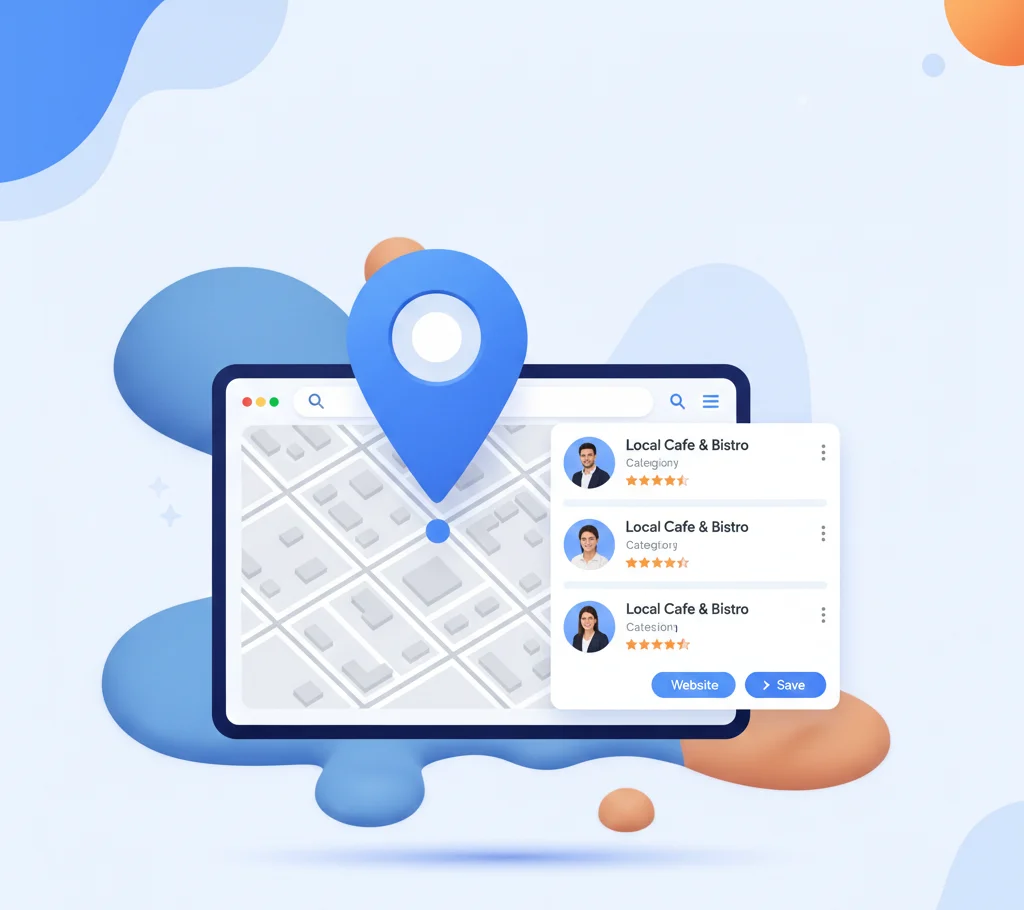
For small businesses, local SEO is one of the most powerful tools available. Local SEO refers to the practice of optimizing your online presence to appear in geographically relevant search results such as “plumber near me” or “coffee shop in [city].”
When people search for products or services in their area, Google surfaces a local pack a map-based listing that shows nearby businesses. Appearing here can dramatically increase foot traffic, phone calls, and local sales.
Local SEO strategies include optimizing your Google Business Profile, building local citations, earning reviews, and ensuring your website content is relevant to your business location.
If you’re a small business owner looking to compete against larger brands, investing in local SEO is one of the smartest moves you can make. Learn more about working with specialists: Hire an SEO Expert for Small Business.
6. SEO Establishes Credibility and Trust
Ranking highly in search results sends a powerful trust signal to users. People instinctively trust Google’s judgment. If your business appears at the top of organic search results, users perceive you as more credible and authoritative even before they’ve visited your site.
This trust is built through multiple SEO signals:
- High-quality, expert content that genuinely answers user questions
- Backlinks from reputable websites that vouch for your authority (link building)
- Technical health of your website fast load times, secure connections (HTTPS), mobile optimization
- Positive user experience that keeps visitors engaged
Over time, a strong SEO strategy contributes directly to reputation management shaping how your brand appears and is perceived across all search results.
7. SEO Improves User Experience on Your Website
Google’s algorithms increasingly prioritize user experience signals. Page speed, mobile responsiveness, clear navigation, and well-structured content are all ranking factors, which means optimizing your website for SEO also makes it better for real visitors.
Good SEO practices like using descriptive alt text on images, creating logical site architecture, and writing clear headings don’t just help search engines understand your content, they make your site easier and more enjoyable to use for every visitor.
The business benefit: A better user experience reduces bounce rates, increases time on site, and improves conversion rates. SEO and UX are no longer separate disciplines, they’re deeply intertwined.
8. SEO Delivers Measurable, Data-Driven Results
One of the clearest advantages of SEO in digital marketing is that results are measurable. Tools like Google Analytics, Google Search Console, and other SEO platforms allow you to track:
- How much organic traffic your website receives
- Which keywords are driving visits
- Your rankings on search engine results pages (SERPs)
- Conversion rates from organic search
- Monthly search volume for target keywords
This data allows you to refine your SEO strategies, double down on what works, and make smarter marketing decisions. Unlike traditional advertising, SEO gives you a granular view of your digital marketing performance.
9. SEO Gives You a Sustainable Competitive Advantage
Your competitors are investing in SEO. If you’re not, you’re ceding ground in search engine results pages by default.
The businesses that consistently rank highly on Google for their target keywords enjoy a structural advantage, they capture the majority of organic clicks before competitors even get a look-in. This visibility translates directly into more leads, more customers, and more revenue.
Building a solid SEO foundation now creates a competitive moat that becomes harder for competitors to overcome over time. The longer you invest in SEO, the more authority and ranking power your website accumulates.
10. SEO Is Essential to a Complete Digital Marketing Strategy
SEO doesn’t operate in isolation, it amplifies every other part of your digital marketing strategy. Content marketing generates organic traffic. Social media sharing builds backlinks. Email campaigns drive return visits that improve engagement signals.
Conversely, strong SEO makes all your other marketing efforts more effective. A well-optimized website converts more of the paid traffic you drive to it. Blog content that ranks organically also fuels your social media calendar. SEO in digital marketing is the connective tissue that holds your entire online presence together.
The Four Core Components of SEO
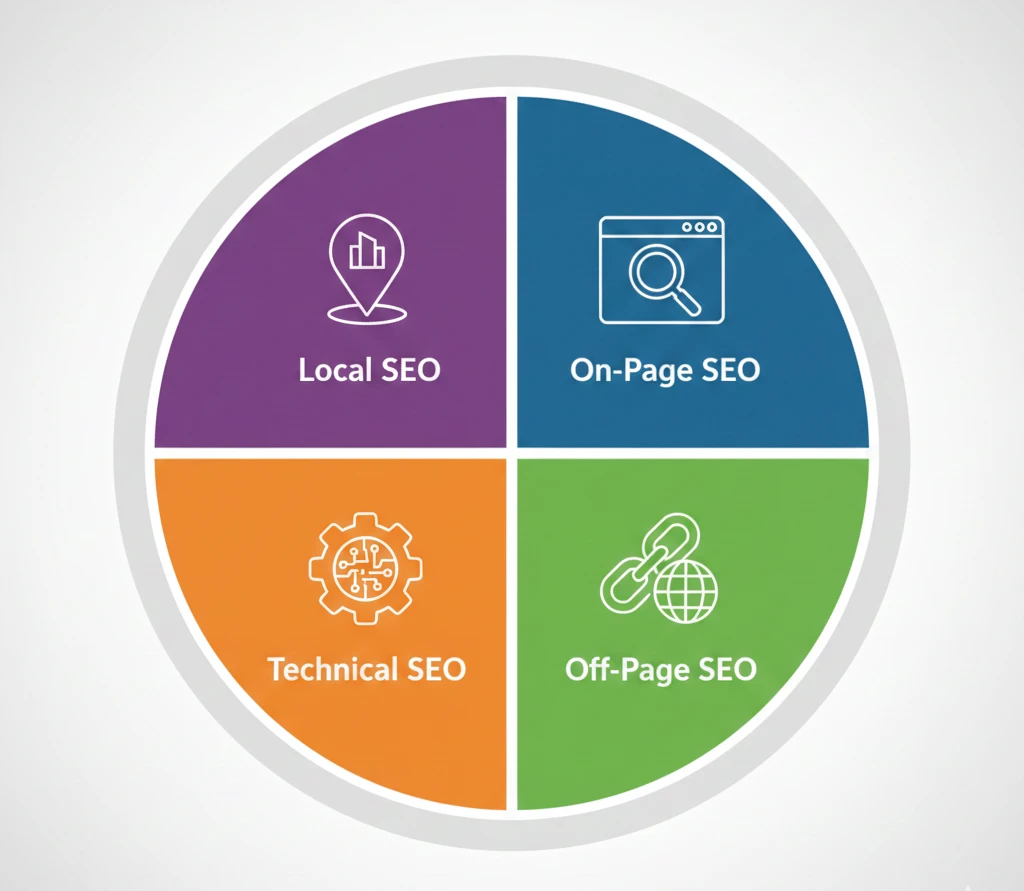
Effective SEO work rests on four interconnected disciplines:
On-Page SEO: Optimizing Your Website Content
On-page SEO refers to optimizations you make directly on your web pages. This includes:
- Keyword research to identify what your potential customers are actually searching for
- Title tags and meta descriptions that accurately represent your content
- Header structure (H1, H2, H3) that organizes content logically
- Internal linking to connect related pages and distribute authority
- Alt text on images so search engines understand visual content
- Content quality; writing that genuinely serves the reader’s intent
On-page SEO is the foundation of every high-ranking page. Without it, even the best off-page efforts will underperform.
Off-Page SEO: Building Authority and Trust
Off-page SEO refers to actions taken outside your website to improve its authority and ranking. The most important off-page SEO factor is link building; earning backlinks from other reputable websites that point to your content.
Search engines treat backlinks as votes of confidence. When authoritative websites link to your content, it signals that your site is trustworthy and worth ranking higher in search results.
Off-page SEO also includes brand mentions, social signals, online reviews, and digital PR all of which contribute to how search engines perceive your site’s authority.
Technical SEO: Helping Search Engines Access and Understand Your Site
Technical SEO refers to the backend optimizations that ensure search engines can crawl, index, and rank your site effectively. It also encompasses site speed, mobile-friendliness, structured data markup, XML sitemaps, canonical tags, and crawl error resolution.
Technical SEO is often where many businesses fall short. A site can have excellent content and strong backlinks but still underperform if search engine spiders can’t access and index it properly.
Regular technical SEO audits are essential to maintaining a healthy site that search engines can easily understand and rank.
Local SEO: Capturing Geographically Relevant Traffic
As covered earlier, local SEO focuses on appearing in location-based search results. It’s critical for any business that serves a specific geographic area from restaurants and retailers to law firms and medical practices.
AI and SEO: What’s Changing in Search
The rise of AI-powered search including Google’s Search Generative Experience (SGE) and AI overviews is reshaping how search results are displayed. AI tools now synthesize information from multiple sources to provide direct answers at the top of the search results page.
This makes AI and SEO deeply connected disciplines. To appear in AI-generated answers, your content needs to be:
- Clearly structured with direct, authoritative answers
- Written with genuine expertise and depth
- Properly marked up so search engines understand context
- Trusted enough (through backlinks and authority) to be cited by AI systems
Businesses that invest in strong, expert-level SEO practices today are best positioned to remain visible as AI continues to evolve search behavior.
Common SEO Mistakes That Hurt Business Growth
Even well-intentioned SEO efforts can backfire without proper guidance. The most common mistakes include:
Keyword stuffing — forcing target terms into content unnaturally, which search engine algorithms now penalize.
Ignoring technical SEO — slow load times, broken links, and crawl errors silently destroy rankings.
Targeting the wrong keywords — chasing high search volume terms without considering buyer intent leads to traffic that doesn’t convert.
Neglecting mobile optimization — Google uses mobile-first indexing, meaning your mobile experience directly impacts your rankings.
Publishing thin content — short, shallow pages that don’t genuinely help users rank poorly in today’s search environment.
No link building strategy — without authoritative backlinks, even great content struggles to rank in competitive niches.
When Should You Hire an SEO Professional?
SEO is learnable, but executing it well, especially for competitive markets requires experience, tools, and strategic depth. If your business relies on online visibility for growth, working with a qualified SEO expert or consultant can significantly accelerate your results.
An experienced SEO professional can audit your existing site, identify opportunities, prioritize the highest-impact tactics, and build a roadmap for sustainable growth.
If you’re ready to take that step, explore what SEO consulting involves and how to hire the right consultant or go directly to finding SEO expert for your small business.
Frequently Asked Questions About SEO
What Are the 4 Pillars of SEO?
The four pillars of SEO are on-page SEO, off-page SEO, technical SEO, and local SEO. On-page covers content and keyword optimization; off-page covers link building and authority; technical covers site infrastructure and crawlability; and local covers geographic visibility for location-based searches. Together, they form a complete SEO strategy.
What Are the 5 Important Concepts of SEO?
The five most important concepts in SEO are: keyword research (understanding what your audience searches for), content quality (creating genuinely helpful, expert-level content), link building (earning authority through backlinks), technical health (ensuring search engines can crawl and index your site), and user experience (making your site fast, accessible, and easy to navigate). Mastering these five areas forms the backbone of SEO success.
What Are Two Benefits of a Business Using SEO?
The two most impactful benefits are sustainable organic traffic and enhanced credibility. SEO drives a consistent stream of high-intent visitors to your website without ongoing ad spend, and ranking highly in search results builds trust with potential customers — signaling that your business is authoritative and worth engaging with.
How Important Is SEO Really?
SEO is one of the most important long-term investments a business can make in its online presence. Over 90% of online experiences begin with a search engine, and the majority of clicks go to organic results rather than paid ads. Businesses that rank highly on Google consistently generate more traffic, more leads, and more revenue than those that don’t — making SEO not just important, but essential for business success in the digital age.
Further Reading: For a deeper understanding of search engine best practices and algorithm guidance, refer to Google’s official Search Central documentation — the authoritative source for how Google evaluates and ranks web content.