
> E-Commerce
Why MUSE x MUSE Was Already Winning Attention, and How Error Sync Helped Turn That Into Sales
Luxury jewelry doesn’t follow the rules of everyday purchases. No one wakes up needing a fine jewelry piece the way they need groceries or a phone charger. They buy because something clicks, because a brand makes them feel something. The aesthetic, the story, the world it invites them into, the quiet statement it lets them make about who they are.
MUSE x MUSE understood that from the start. With its West Village boutique in New York City, a carefully curated lineup of independent designers, a 90,000-strong Instagram following, and features in Vogue, The New York Times, and ELLE, this wasn’t a brand fighting for attention. It already had the kind of cultural credibility most jewelry brands spend years chasing.
The challenge wasn’t visibility, it was leverage. How do you take everything the brand has already built and turn it into stronger commercial performance?
That’s where Error Sync came in.
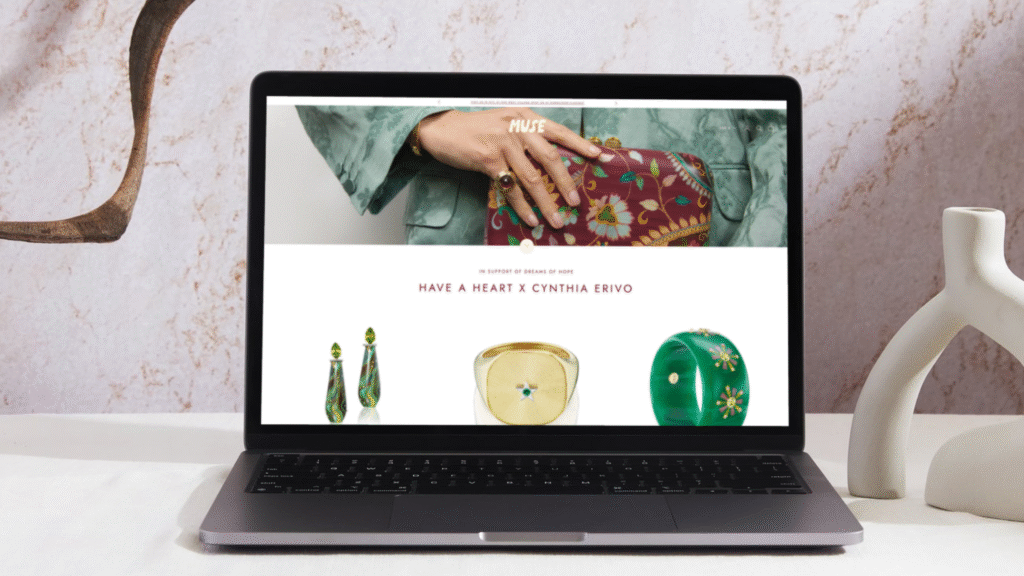
The Numbers:
- Started at: 2–5 orders/day (Facebook DMs only)
- After social campaigns: 10–15 orders/day
- With Shopify store: 25–32 orders/day (regular months)
- Peak season: 45–60 orders/day
Project Details
The Gap Between Admiration and Purchase
There is a version of social media success that looks great on paper and underdelivers in revenue. High follower counts, strong engagement, beautiful content. And yet the path from a follower double-tapping a post to actually visiting the site and buying something remains fuzzy. For MUSE, the ingredients were all there. A physical retail presence. A Nordstrom NYC partnership. A cause-led brand arm called Have A Heart with charity-linked collections. A blog, designer spotlights, press validation. An Instagram profile with over 94,000 followers and more than 10,700 posts. What needed sharpening was the thread connecting all of it. The emotional journey that moves someone from "I love this brand" to "I just bought something." In luxury, that journey is rarely quick. A customer might discover a designer through a post, follow the brand for weeks, read about a collaboration, subscribe to the newsletter, browse the site, and only then buy. That is not a failure of the product. It is just how luxury purchasing works. The role of social media is to make every step of that journey feel intentional and compelling.
Rethinking What Social Media Is Actually For
Most brands treat social media as a content obligation. Post consistently, use the right hashtags, show the product clearly. That thinking produces a feed that looks fine and converts poorly. Error Sync approached MUSE differently. Social media was treated not as a posting schedule but as the first chapter of a brand story that ends at checkout. That reframe shaped everything. The name MUSE alone carries weight: aspiration, femininity, art, taste, inspiration, the kind of woman who collects beautiful things with intention. The brand already leaned into that publicly. The strategy was to make that identity feel so magnetic that following the brand was itself an experience, not just passive browsing. Three things had to happen for that to work.
Building a World, Not Just a Feed
The brand identity had to feel emotionally coherent
MUSE is not a discount jewelry retailer. It sits in a space where editorial taste and cultural relevance matter as much as the product itself. So the content could not feel like a catalog. It had to feel like a point of view. Styled moments, not staged product shots. Tastemaker energy, not sales language. The kind of content that makes someone think: this brand gets it, and so do I.
The visuals had to create desire before the click
MUSE already had strong visual culture to draw from. Designer collaborations, event-driven content, lookbook direction, press references. The opportunity was to frame all of that in a way that made the audience feel like insiders, not shoppers. When someone feels like they are being let into a world rather than sold to, their resistance drops and their desire rises. That is when social starts doing real commercial work.
The funnel had to have a clear direction
Awareness is not enough on its own. The content strategy had to move people through stages: introducing the brand world first, deepening emotional connection through storytelling and curation, and then creating clear entry points into the actual shopping experience. MUSE’s site already supported this well. Email capture with a first-purchase discount, free next-day domestic shipping, designer discovery pages, cause-led collections, personalized support including customizations and resizing. The site was commerce-ready. Social just needed to send the right kind of traffic into it.
Why This Approach Fits Luxury Specifically
Generic social media strategy tends to optimize for reach and engagement. That is the wrong metric for a brand like MUSE.
The goal is not to go viral. The goal is to attract the right people, make them feel something genuine about the brand, and give them a reason to step inside, whether that is the West Village shop, the Nordstrom flagship, or the online store.
Luxury customers are not impulse buyers. They are identity buyers. They are choosing brands that reflect something about their taste, their values, their sense of self. That means every piece of content is either building that emotional case or failing to.
When social media is treated as a brand-building tool rather than a posting obligation, it starts compounding. Each piece of content adds to a larger picture of who MUSE is and who shops there. Over time, that picture becomes persuasive in a way that no single ad ever could.
The Broader Lesson for Luxury Brands
MUSE is a clear example of something worth stating plainly. In luxury, you are not selling a product. You are selling a belonging to a world. The product is just the most tangible way to enter it.
Social media that only shows inventory misses the point entirely. But social media that builds aspiration, communicates identity, and creates a genuine sense of “I want to be part of this” is one of the most powerful commercial tools a luxury brand has.
The website can be perfect. The product can be beautiful. But if the emotional journey getting there is vague or fragmented, conversion suffers. Structure that journey well, and everything downstream performs better.
A Final Note
MUSE x MUSE already had what most brands spend years trying to build, real cultural traction, credible press validation, a presence in one of the world’s most competitive retail landscapes, and a community that genuinely connected with the brand.
Error Sync didn’t need to reinvent anything. The foundation was already there. The role was to sharpen it, to give that existing brand world a stronger commercial backbone so that all the attention MUSE had earned could translate more consistently into revenue.
Because in luxury, the gap between admiration and purchase isn’t logical, it’s emotional. Close that gap, and everything else starts to fall into place.